
LATEX FLORA
Each work of art is individually handcrafted following your order. Its creation takes approximately 30 business days, excluding shipping time.
CHAPITRE II – LATEX FLORA
The Forest That Learned to Wear Plastic
Technology promised a second nature. Instead, it gave us a first plastic.
Latex Flora is the scent of a forest that has become all polymer—a woodland where the mycelium network now transmits data packets, where the last orchid grows from a 3D-printed stem. Antoine Lie asked: What happens when the earth that is our home turns into a factory that never stops humming?
The answer lives inside a bottle that is also a relic.
The Bottle – Plastic Forest (The Artifact)
The bottle serves as a piece of the forest itself.
- Wood (the life): A piece of driftwood or burnt oak growing through the stone—weathered, cracked, sculptural. It represents the life force of the forest, now petrified and intertwined with the inorganic.
- Plastic (the infection): A translucent, black, milky-green resin that oozes over the natural materials like a fungal bloom. It looks imperfectly perfect, organic, and terrifying—a new skin that the forest never asked for.
Latex Flora comes to light as 2nd fragrance in Anthologie Contemporaine trilogy as a single piece and a statement design. It is its release, its ecstatic rebellion—but a rebellion that knows no other language than perfection.
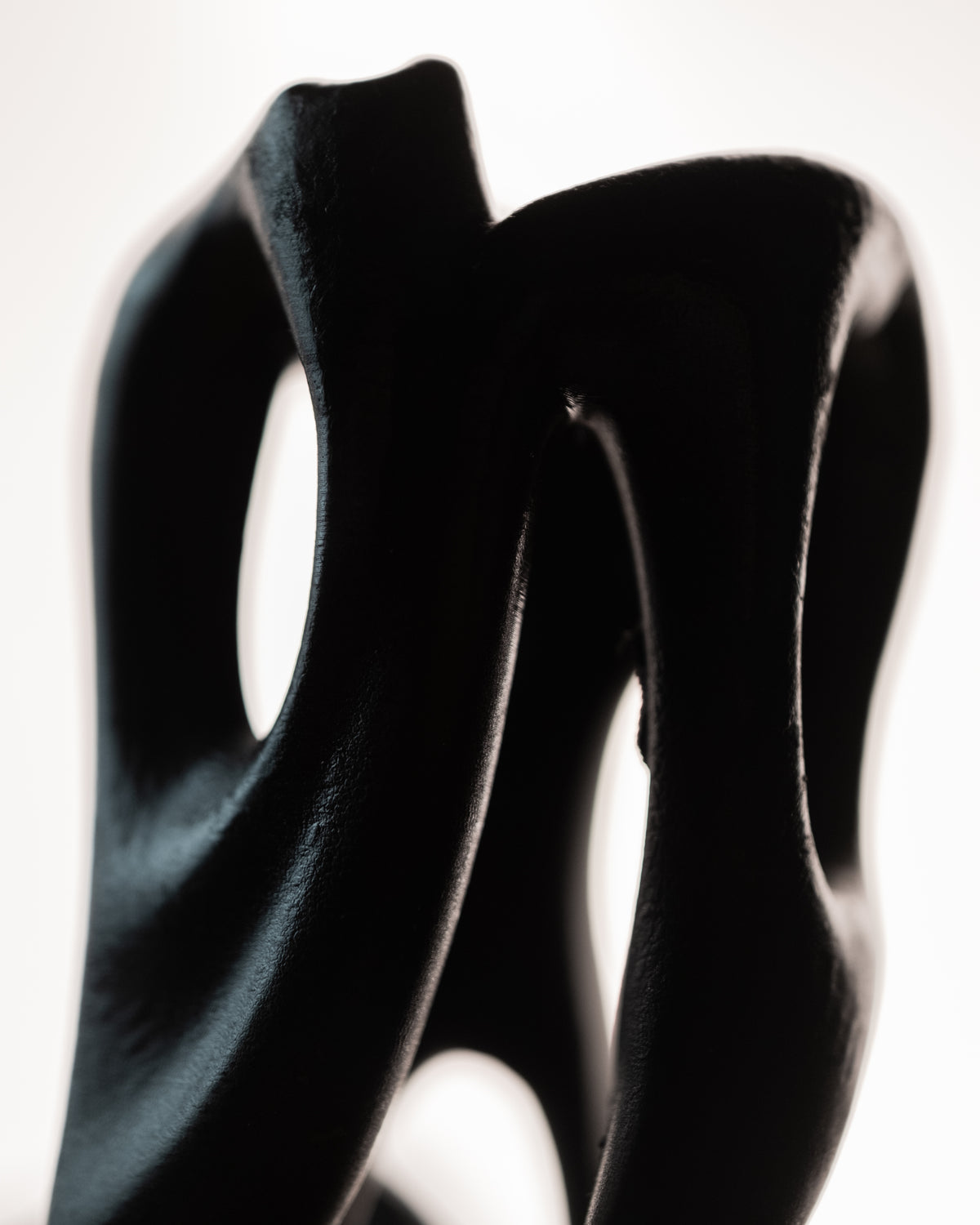
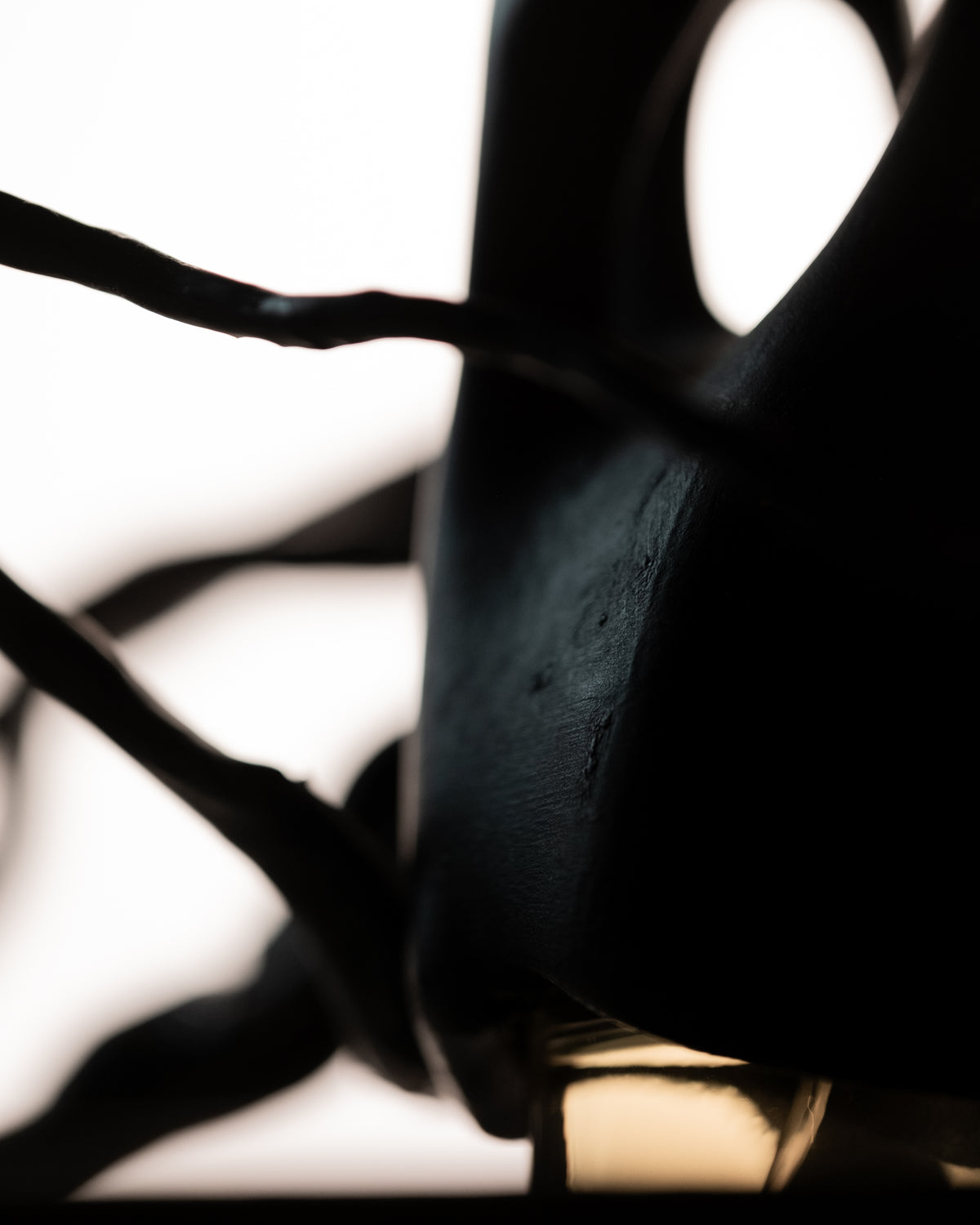
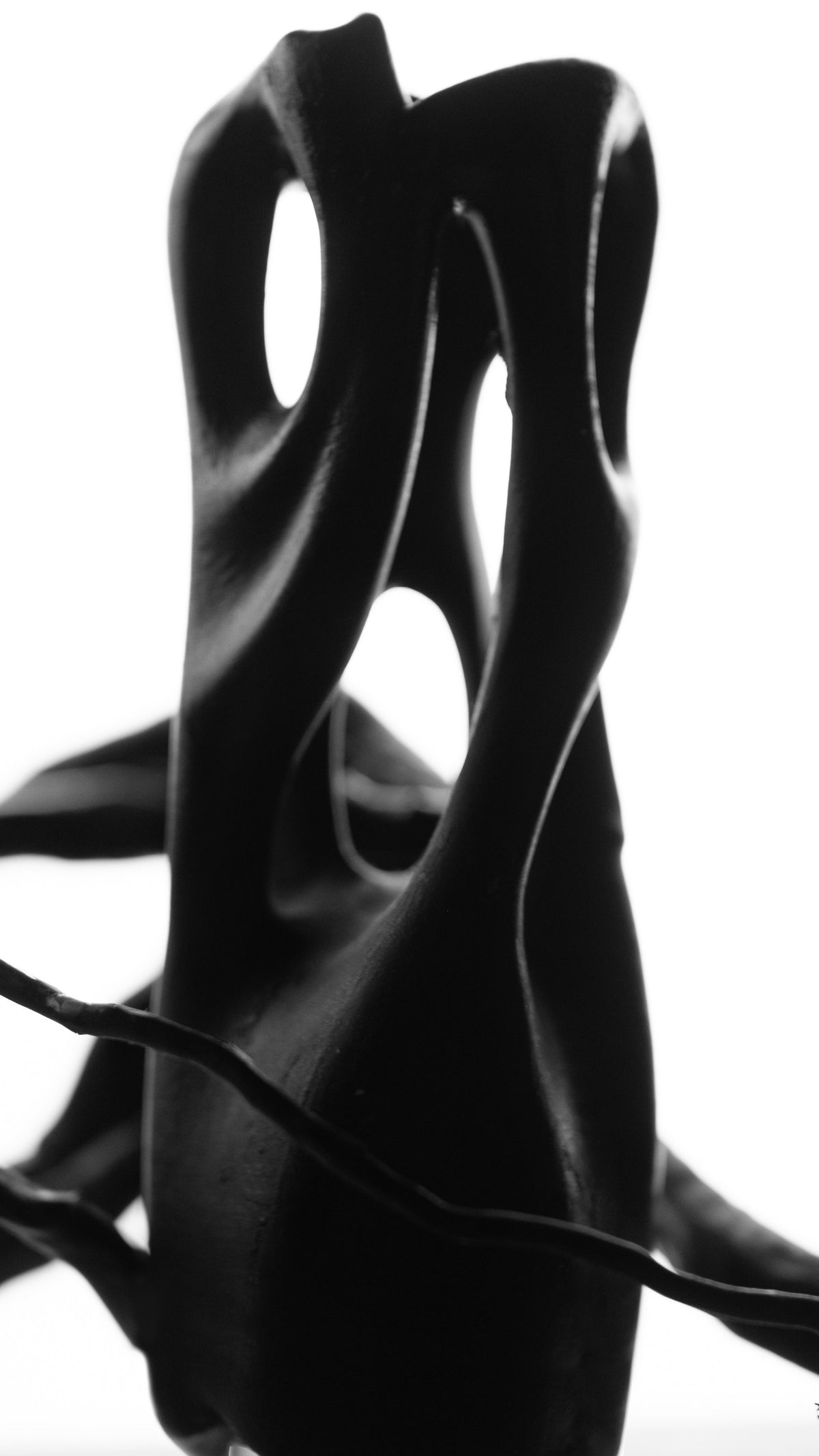
This unique piece erupts from a base of natural wood – raw, unfinished, dark with age. A single salvaged block of oak or walnut, hollowed by hand to hold the perfume. Its grain is visible, its edges worn smooth by weather. The wood is real. It grounds the object in the living world—but the plastic above it has never known life.
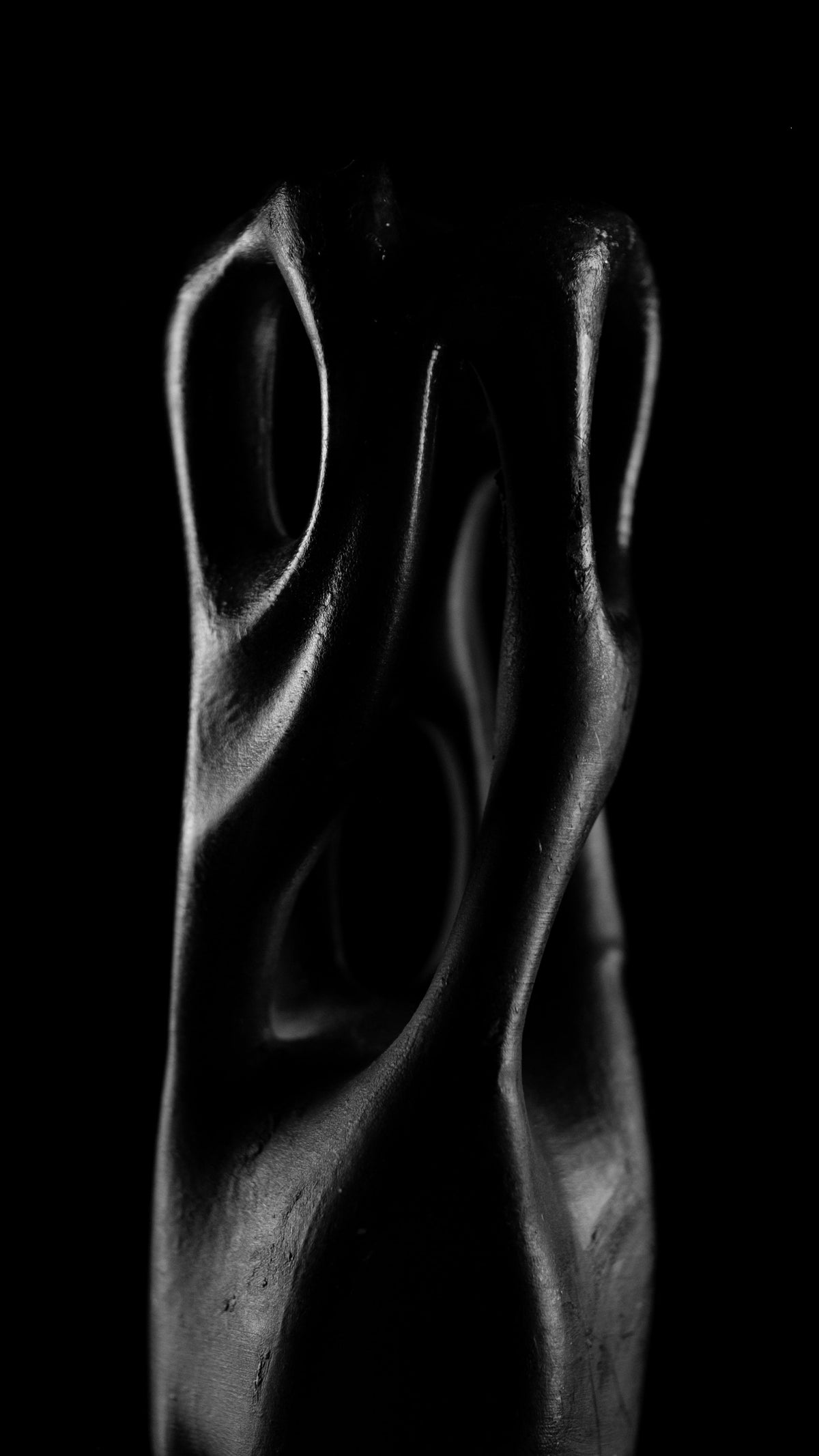
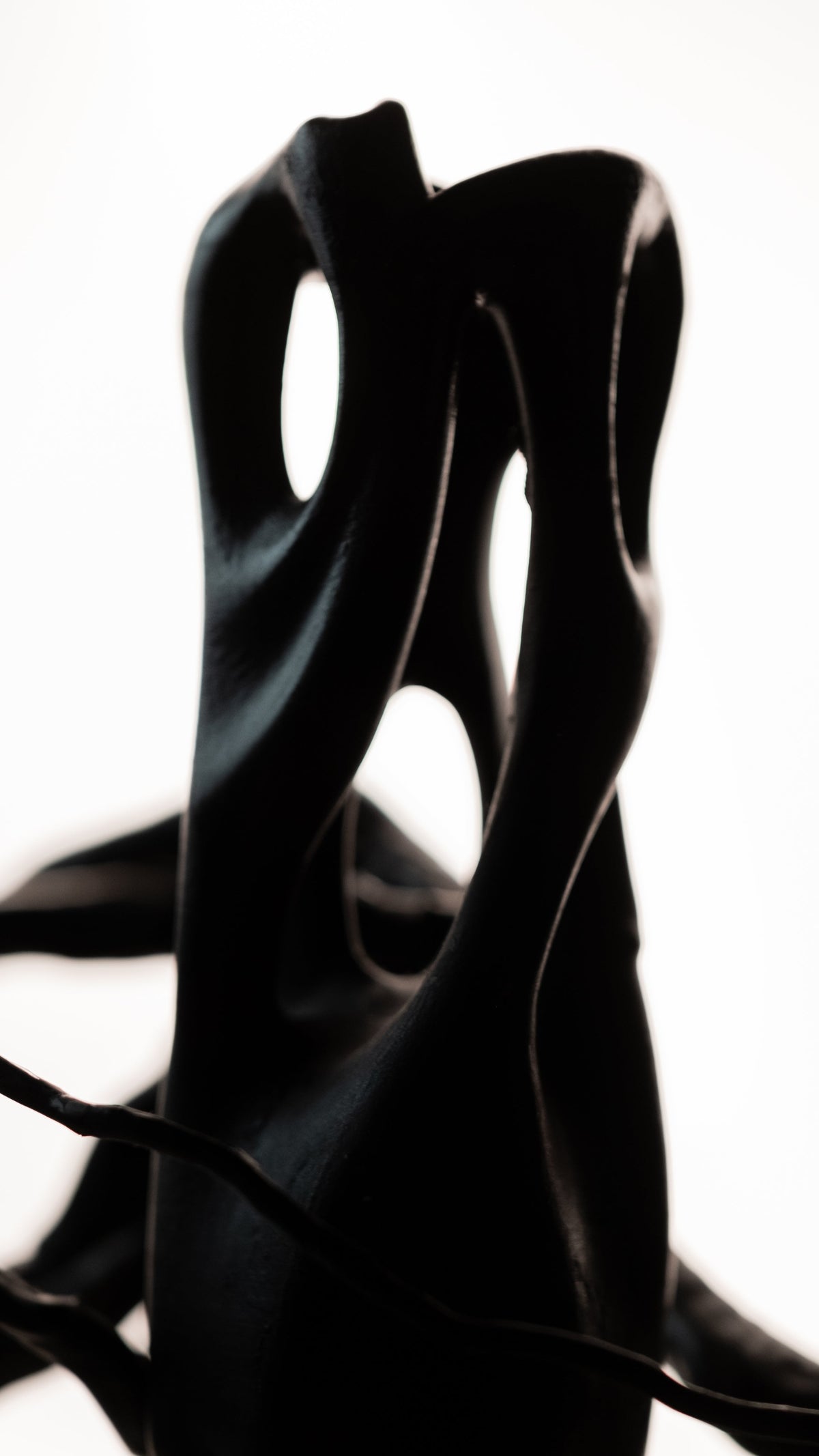
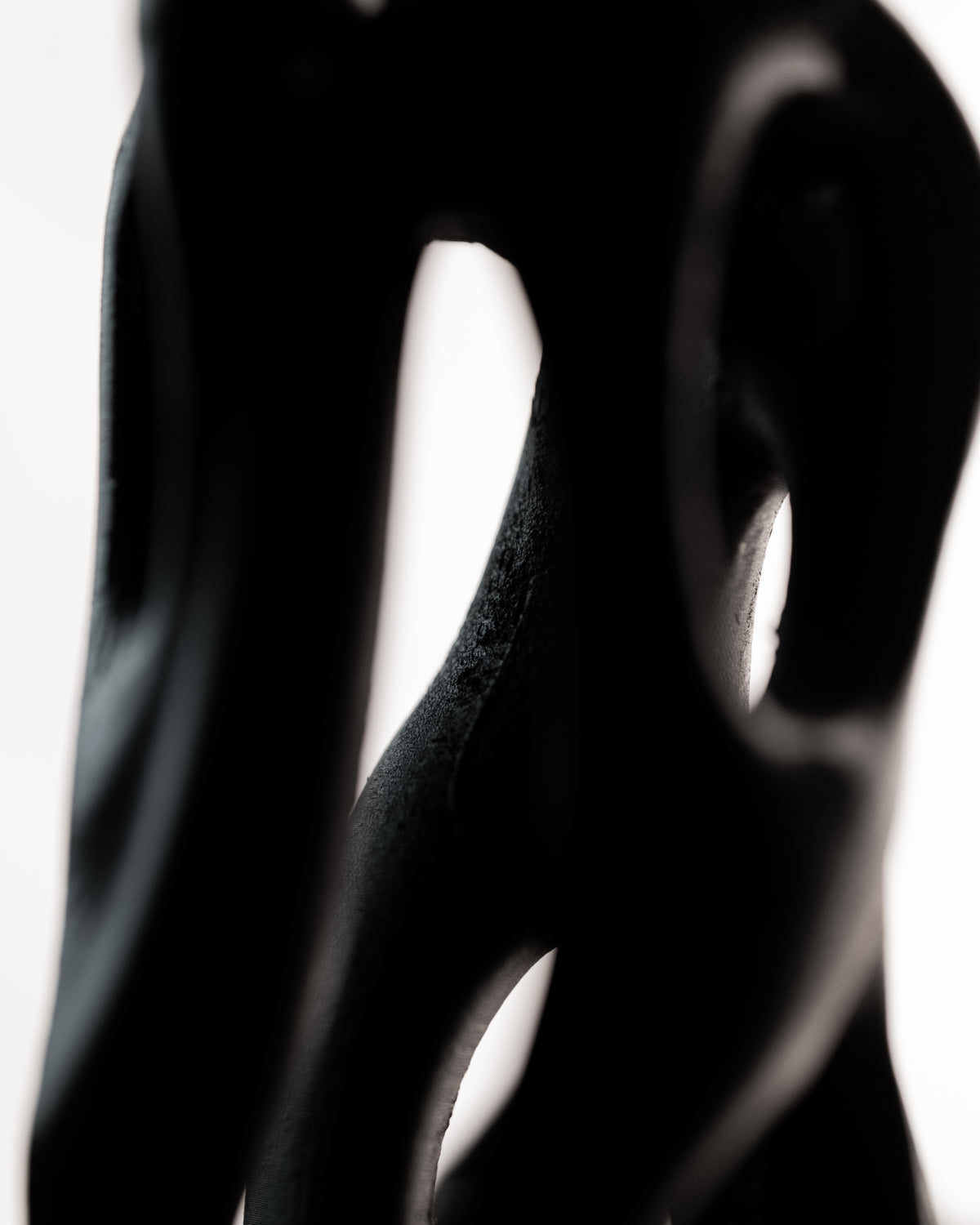
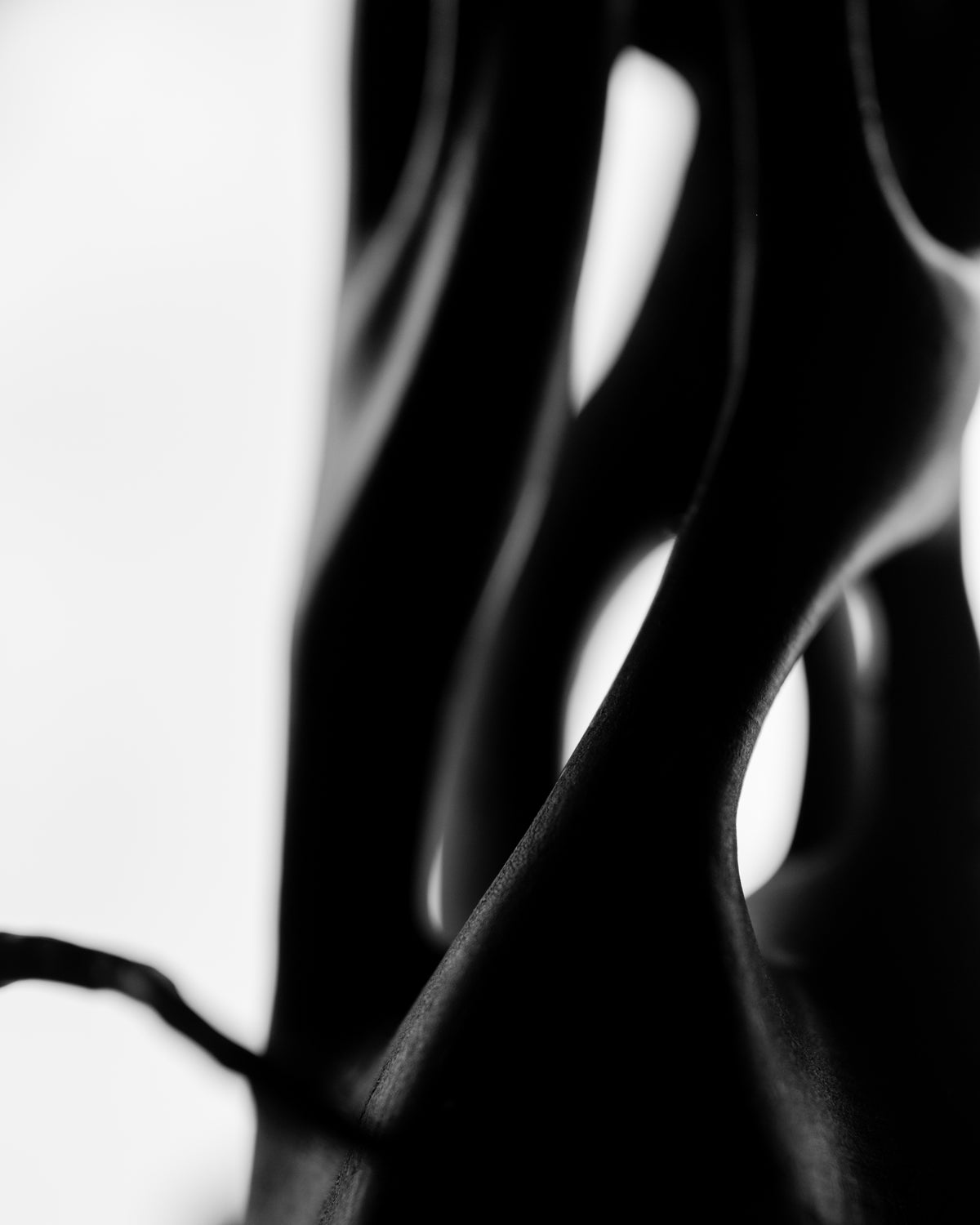
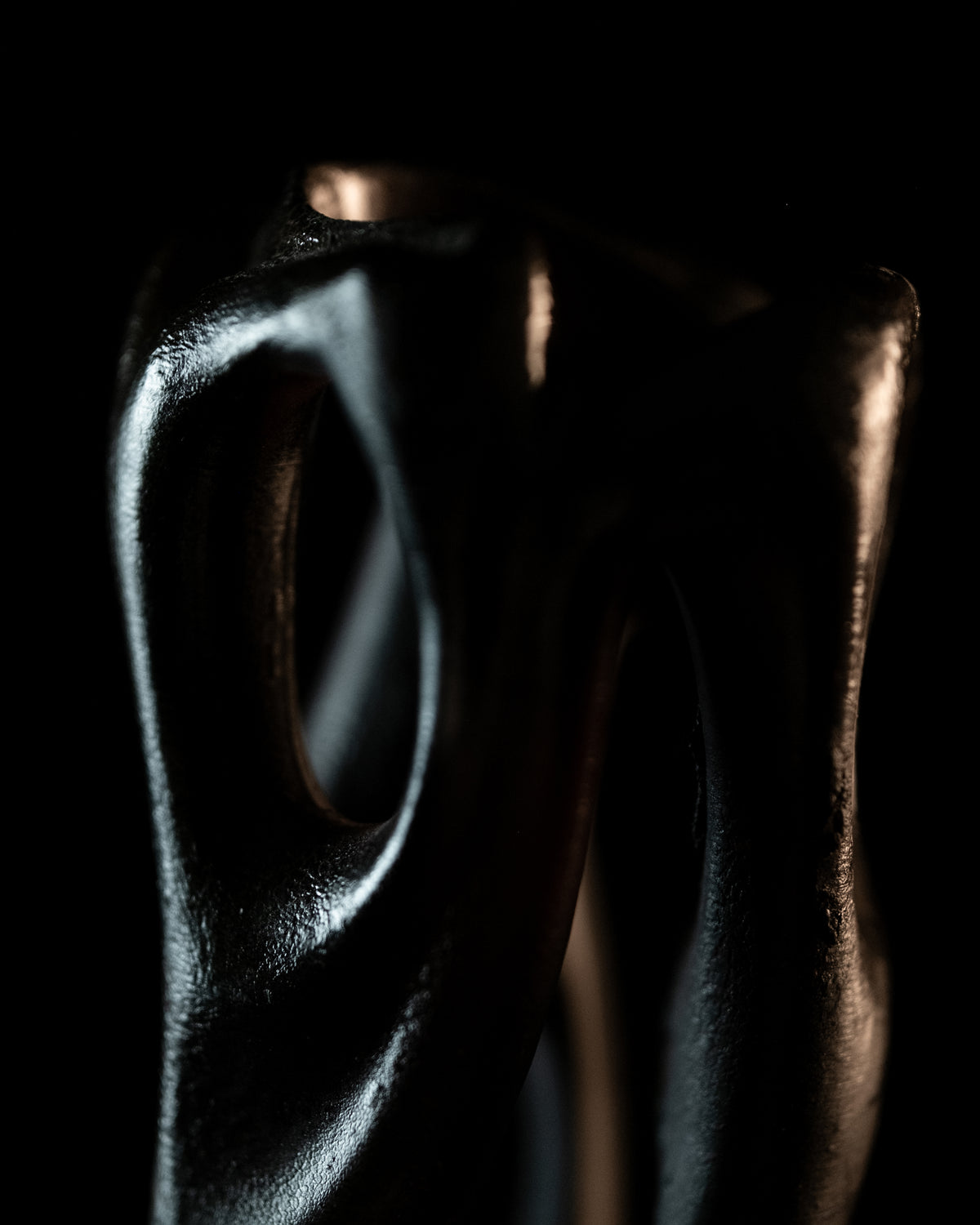
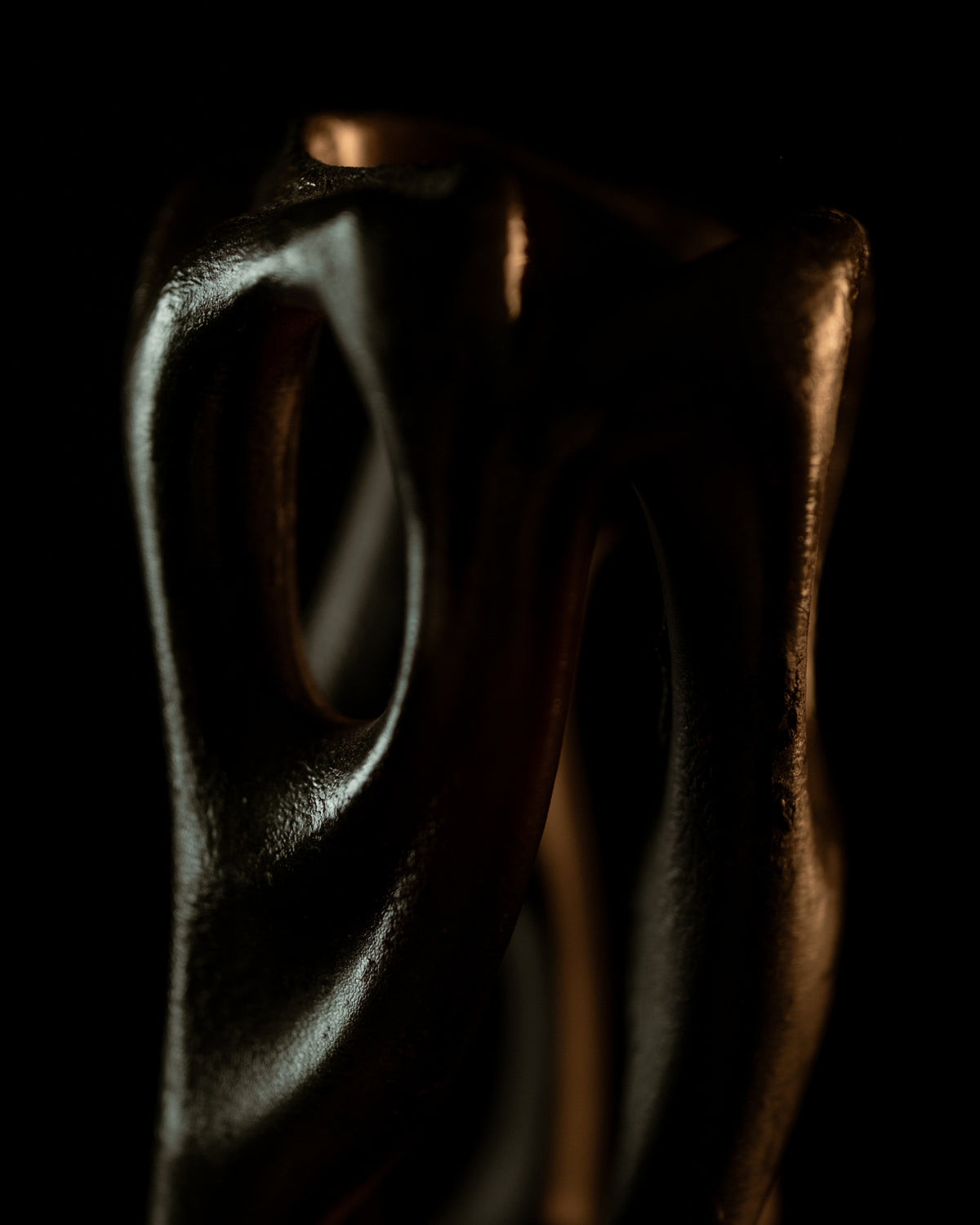
From this wooden base, a frenzy of black plastic branches twists upward in what appears to be a wild, crazy dance. They loop, spiral, knot, and split mid-air as if caught in a gale of their own making. Yet look closer. The entanglement is too perfect. Every curve is mathematically precise. Every branch reaches exactly the same height before curling back. The chaos is an illusion. This is artificial design at its most desperate—because this is the only thing plastic knows.
The plastic aims up. Toward the sky. Toward the sun. Not out of instinct or nature, but out of a programmed, hollow longing for life it will never possess. The branches stretch higher than any natural vine could, then higher still, until the piece barely balances on its wooden base. They do not grow; they simulate growth. They do not dance; they perform a dance frozen in perfect, unbreakable repetition.
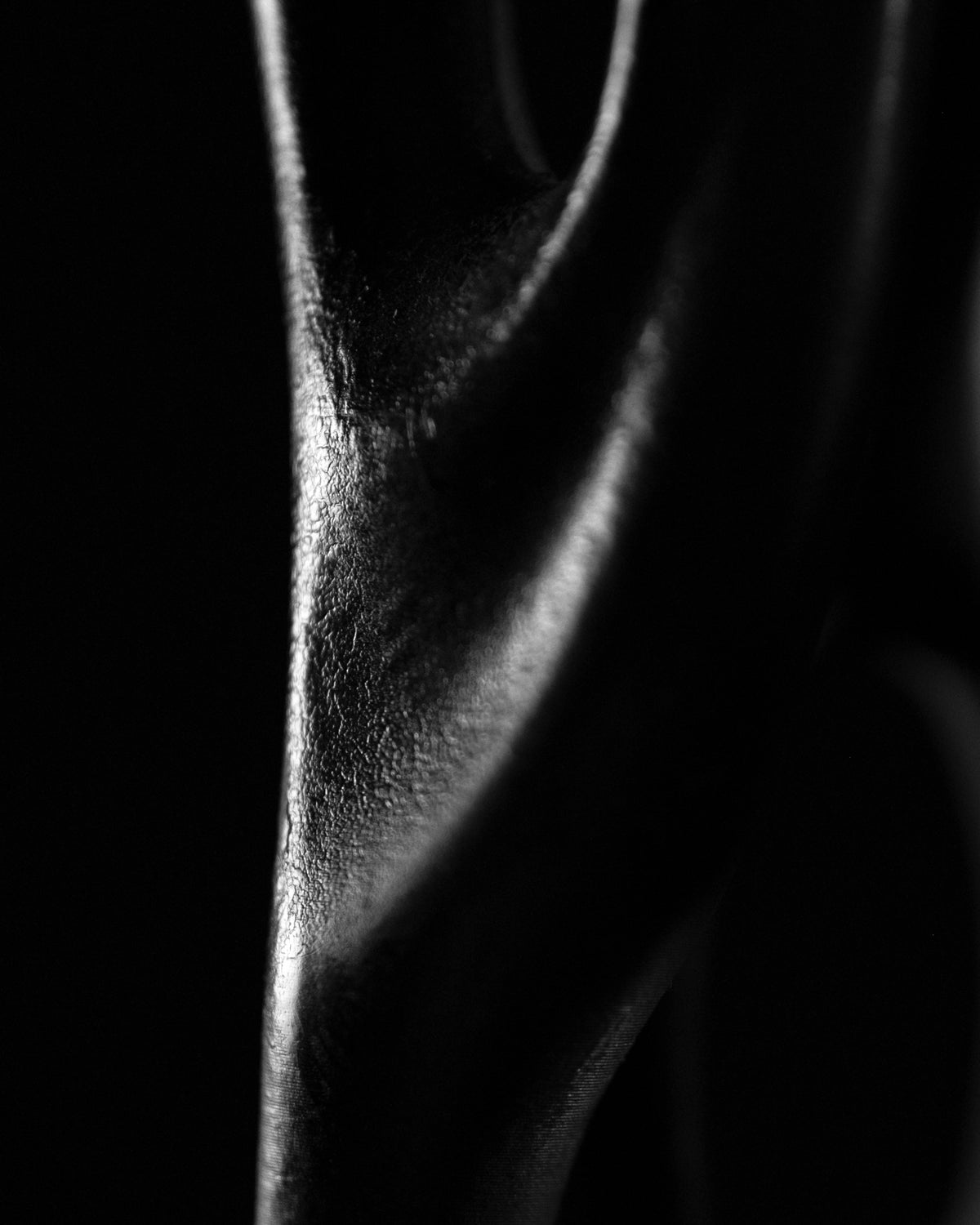
There is no iron. No stone. Only wood (real, warm, imperfect) and black plastic (opaque, seamless, terrifyingly precise). The plastic is deep black, its surface shifting between matte and a faint, oily gloss. No translucency. No green. Only black, aiming skyward with the desperation of something that was never alive.
The perfume is held inside the hollowed wood, visible only through a single narrow gap where the branches part for a moment—as if the plastic, in its perfect design, accidentally left one small flaw.
Because this is a pièce unique, the one imperfection is sacred: the wood's natural knot that the plastic could not fully enclose. Everything else is flawless. That is the horror.
To hold it is to feel the warm, irregular grain of wood in your palm and the cold, mathematically perfect branches brushing your fingers. You are not holding a landscape mid-destruction. You are holding a landscape that desperately wants to be alive—but only knows how to be perfec
The act of picking up this bottle becomes a ritual. Your fingers touch the once alive wood in an unnatural entanglement with the seamless plastic. You hold a landscape mid-destruction.
The Sensation – Top Notes: Green Tears & Hot Circuits
Press the atomizer. First, the forest speaks—but its voice has changed. A latex accord rises first: the sweet, rubbery whisper of a surgeon's glove, a yoga mat left in the sun, a thousand disposable gloves decomposing over a thousand years. Then green leaves—but living leaves remain elsewhere. This is the smell of crushed plastic foliage from an artificial Christmas tree, the ghost of chlorophyll trapped in polyethylene.
Underneath, a hot metal note: the ozone warmth of a server farm's cooling fans, the smell of a drone's propeller after a long flight over a clear-cut valley.
The Heart – Wilted Photosynthesis
The fragrance deepens into a strange, humid sweetness. Synthetic jasmine—the kind produced in a petrochemical lab, identical to the real flower but missing one molecule of soul. Melted resin—like a 3D printer extruding a rose, layer by layer, the plastic still warm from the nozzle. A rubber accord that evokes tire tracks on wet soil.
Two worlds wage a quiet war here. The memory of real photosynthesis—chlorophyll, wet earth, the breath of ferns—fights against the new reality. But the memory fades. The plastic extends its reign.
The Base – The Continuous Now
In the drydown, Latex Flora leaves behind a single, persistent note: recycled PET accord—clean, slightly sweet, utterly sterile. The smell of a water bottle melted down and reborn as a park bench. The smell of a forest that exists now only as a carbon offset certificate traded on a London exchange.
Mourning remains absent here. Mourning requires a before and after. This scent knows only the continuous now—the beautiful, plastic, profitable now.
The Verdict
Wear Latex Flora on your skin, and you become a walking greenhouse of synthetic life. Every spray asks the question: Can you love a forest that has forgotten how to die?
The bottle sits on your shelf. Outside, a woodland that once held tigers now holds a data center. The perfume holds back its tears. It simply is—a plastic flower blooming on the wrist, beautiful and eternal and hollow.
One spray. Listen to the forest hum.
Choose options